Abraham Teerlink
Foundation
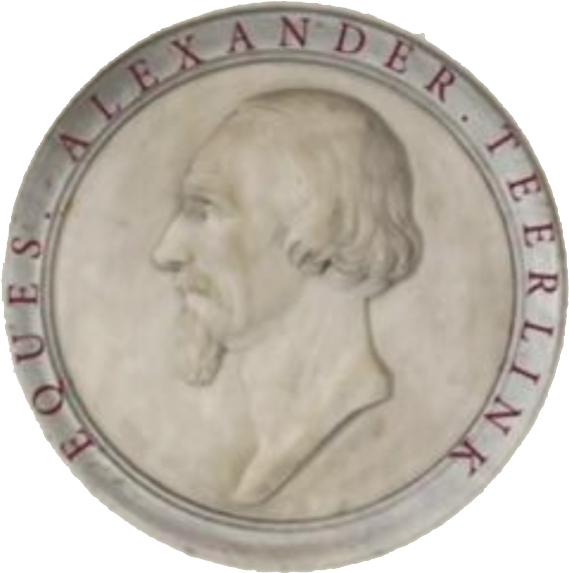
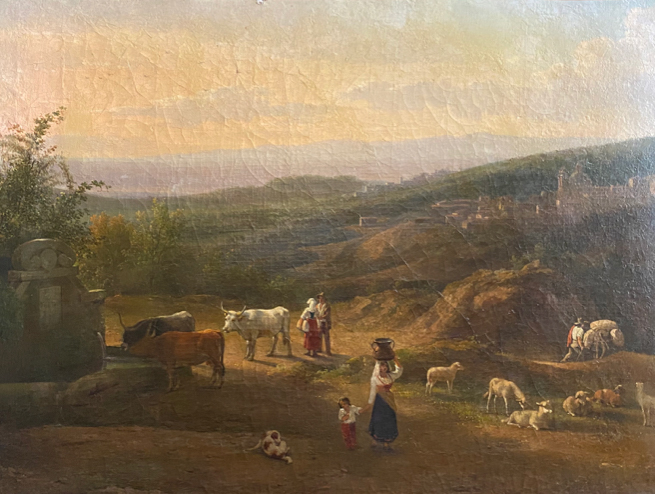
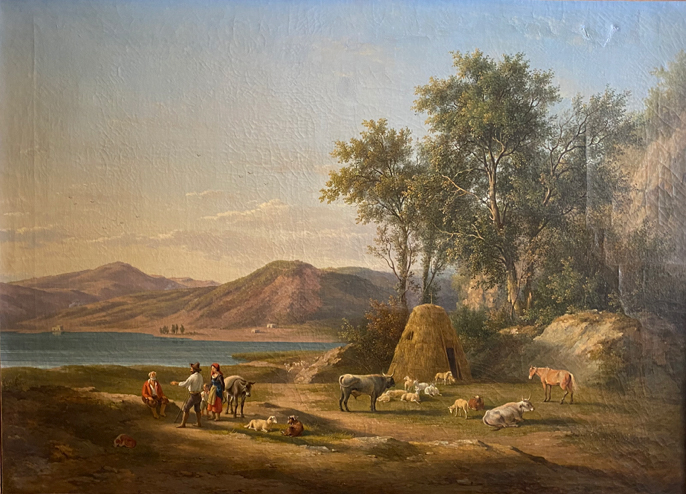
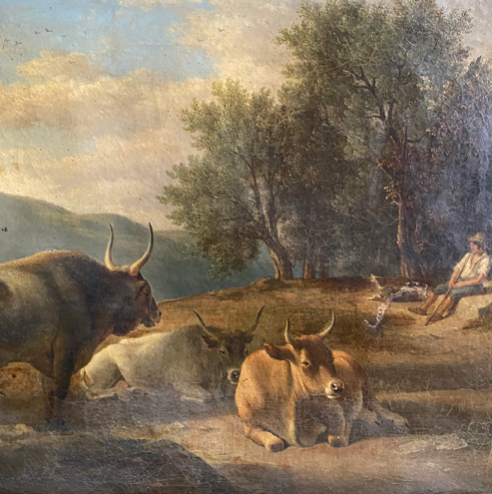
The Abraham Teerlink Foundation pursues the objective of protecting and enhancing the figure and the work of Abraham Alessandro Teerlink, painter, collector and Dutch scholar.
(Teerlink ‹téerliṅk› - Dordrecht 1776 - Rome 1857)
Mission
Teerlink, also known as Jr., to distinguish him from his father who had the same name, was in his formative period a member of the Dordrecht Drawing and Painting Society from 1805 to 1807.
In 1807 he won the Prix de Rome as an artist nominated by the French state. He remained in Paris for 18 months under the Jacques-Louis David artistic teaching, completing his training in 1808. In France he devoted himself to literary activities, cultivating, together with painting, his passion for poetry, especially in French.
In 1810 he moved to Rome to complete his artistic and literary education.
Although he maintained significant contacts with Holland and the Dutch Court throughout his life, he remained to live in Rome with his wife until he died in 1857.
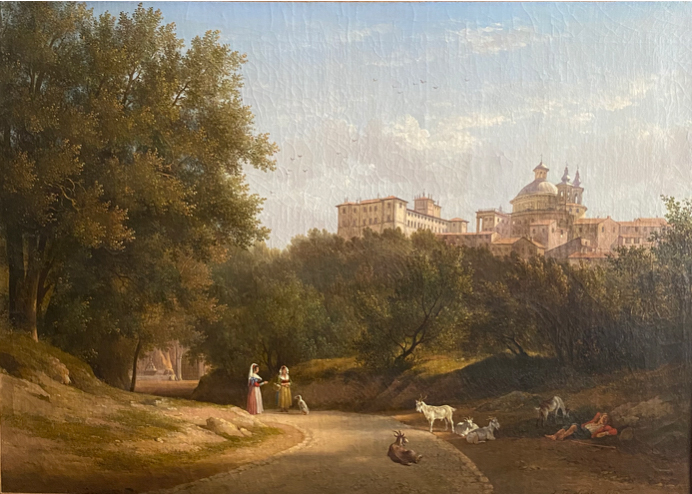
- He was a renowned landscape painter with an international approach; even if he lived in Rome, throughout his life he continued to exhibit his works also in the Netherlands and in the United Kingdom. As a consequence, his works have been widely disseminated in these countries.
- He had a significant appreciation in Holland for his work, but also for his role as a scholar and ambassador of Dutch culture and art. King William I of Holland in 1839 made him a Knight of the Order of the Dutch Lion, the country's highest honour.
- He had a romantic vision of the Italian landscape in a somehow common context with the work of Jakob Philipp Hackert and fellow countryman Joseph August Knip who lived in Rome in the second decade of the 19th century.
From an artistic point of view, the most precious feature, as highlighted by the most distinguished scholars, is the essential contribution provided by T. to the birth of the nineteenth-century ‘macchia’.
Thanks to his cultural background, dating back to the Dutch ‘luminism’ of the seventeenth-century, filtered through the outdoor observation in "a pure colour-light realism”, T. has smoothed the way for the affirmation of the ‘macchia’ and, with it, for the nineteenth-century pictorial revolution (see Corrado Maltese in: “Il Momento Unitario della Pittura italiana nell’800” - Bollettino d’Arte, IV serie, 1954). - He participated in the milieu artistic of his age by spending his time with Vincenzo Camuccini, Massimo D’Azeglio, Pietro Tenerari, G.B.Canevari, Bertel Thorswalden and others who animated the culture and the artistic scenario in that period.
He was a member of the Royal Academy Art in Amsterdam and a teacher at San Luca Academy.
He had over 150 students during his career.
He was a collector and an expert of Dutch and Italian painting and sculpture.
He is buried in Rome in the San Carlo church and a bas-relief with an epigraph on the left nave of the church is dedicated to his memory.
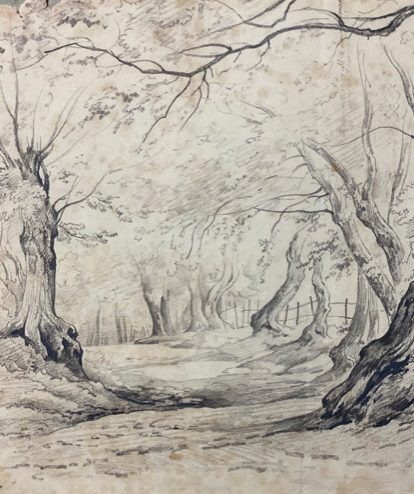
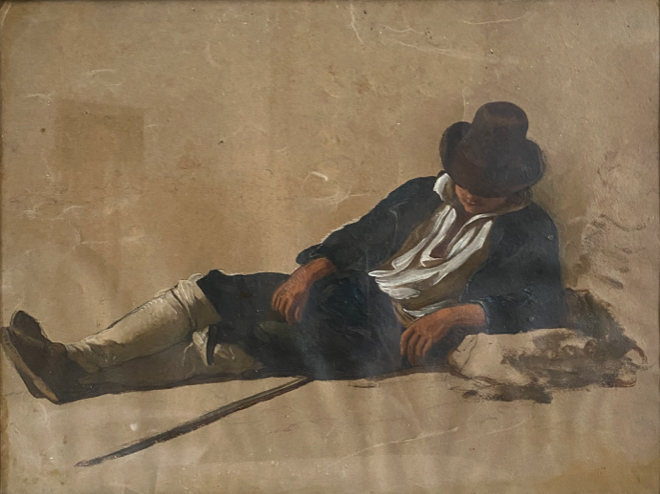
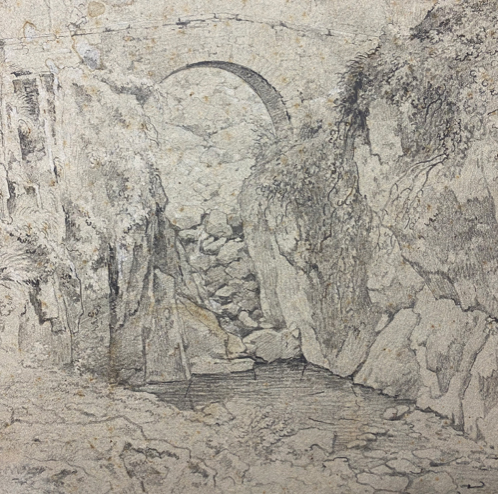
Abraham Teerlink left copious personal studies and works that have been maintained unified over the last two centuries. The heritage is preserved and protected in Italy and abroad, through the activities of the homonymous Foundation.
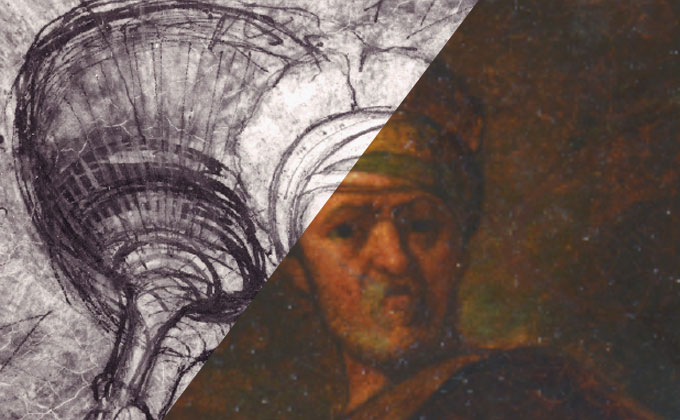
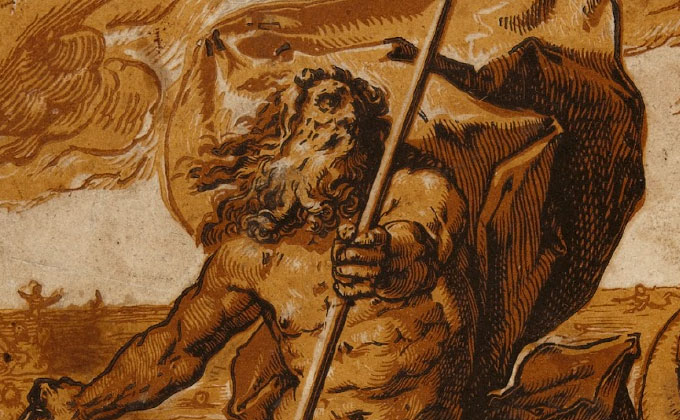
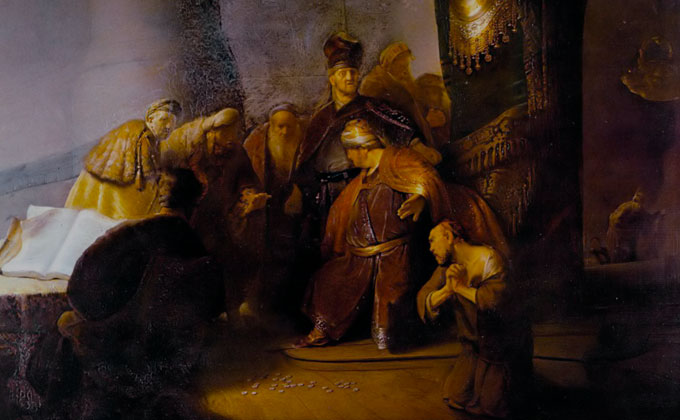
Studies in progress

Activities
The Abraham Teerlink Foundation deals with the study, conservation, restoration and dissemination of the works of Abraham Teerlink and his figure as an artist, scholar and collector.
The Foundation carries out a systematic study of the artist, recognizes and protects the original works of the master.
It pursues these aims through research, restoration and enhancement of these largely unpublished works.
The foundation pursues its aims by organizing moments of study and dissemination of the artist's work, with the collaboration of public and private organizations and institutions in Italy and abroad.
The basic objective of the activities of the organization is to divulge the figure of this significant and cultured master who hold a great position in the nineteenth-century pictorial "revolution", in the specialization of generations of artists and as a supreme collector of Italian and Dutch art.
President Alessandro Caucci Molara